
A different turbine architecture
Conventional wind turbines are built around a central axis with a nacelle and gearbox. As turbine size increases, structural loads grow significantly, requiring heavier components and more complex mechanical systems. This leads to higher material use, more demanding transport and installation, and increasing cost of energy.
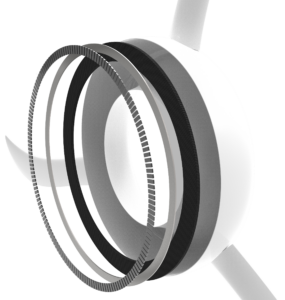
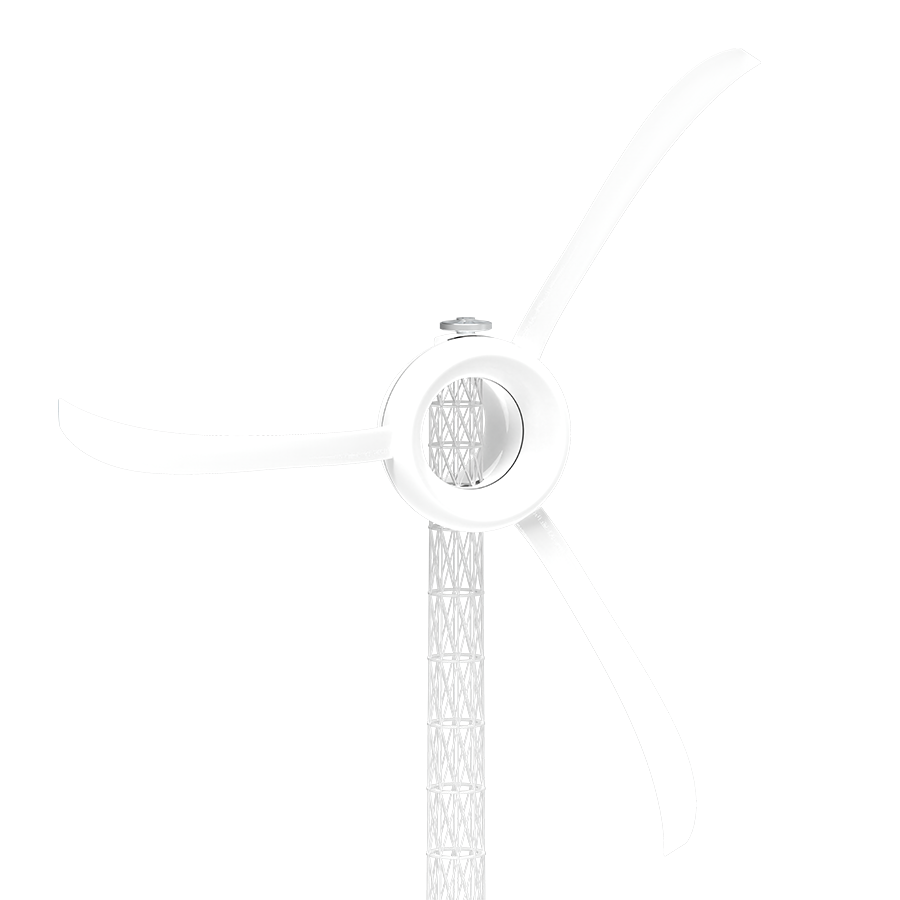
WhisperRing® introduces a fundamentally different architecture in which the generator is integrated into a ring-shaped structure. By rethinking how forces move through the turbine, the design reduces mechanical complexity and enables a more efficient structural configuration.
Because the generator is part of the ring structure, the turbine does not require a conventional central shaft, gearbox or nacelle. This simplifies the overall system and allows a more direct transfer of forces.
The structural configuration distributes loads more evenly across the turbine. This enables a lighter construction while maintaining strength and stability, supporting scalable turbine development.
The technologies used in WhisperRing® turbines are continually being developed in terms of performance, applied materials and manufacturing techniques. The manufacturing and maintenance process of the turbines is also continuously optimized.
WhisperRing has found a combination of technologies that together enable new levels of performance.
Engineering principles
• integrated ring generator architecture
• no central shaft, gearbox or nacelle
• reduced mechanical complexity
• optimized load distribution
• modular structural configuration
Materials and construction
WhisperRing® applies advanced composite materials to combine high strength with low weight.
These materials support precise manufacturing and contribute to a long service life, while limiting the use of scarce resources.
• high strength-to-weight ratio
• reduced structural mass
• efficient production processes
• modular component design
WhisperRing® introduces a new structural principle designed to improve the economics and scalability of wind energy
Lower cost of energy
Wind turbine costs are largely driven by structural mass, transport complexity and installation requirements.
By reducing loads and simplifying the architecture, WhisperRing® enables a more efficient turbine design with lower material use and lower overall system cost.
The structural efficiency of the design supports competitive cost of energy, especially as turbine size continues to increase.
Reduced structural mass
The ring-based architecture distributes forces more evenly across the structure.
This enables a lighter turbine compared to conventional designs with similar power output.
Lower structural mass contributes to more efficient manufacturing, transport and installation, while reducing the use of scarce materials.
Simplified mechanical system
By integrating the generator into the ring structure, the need for a gearbox, nacelle and central shaft is eliminated.
Reducing the number of mechanical components improves reliability and limits maintenance requirements over the lifetime of the turbine.
Lower environmental impact
WhisperRing® is designed to reduce material use and limit the dependency on rare earth elements.
The lighter structure contributes to a reduced carbon footprint across manufacturing, transport and installation phases.
Lower rotational speeds can contribute to reduced noise levels and reduced environmental impact.
Scalable architecture
The structural principle of WhisperRing® supports further scaling of turbine size without proportional increases in structural mass.
This supports future turbine development and enables more efficient wind farm design.